
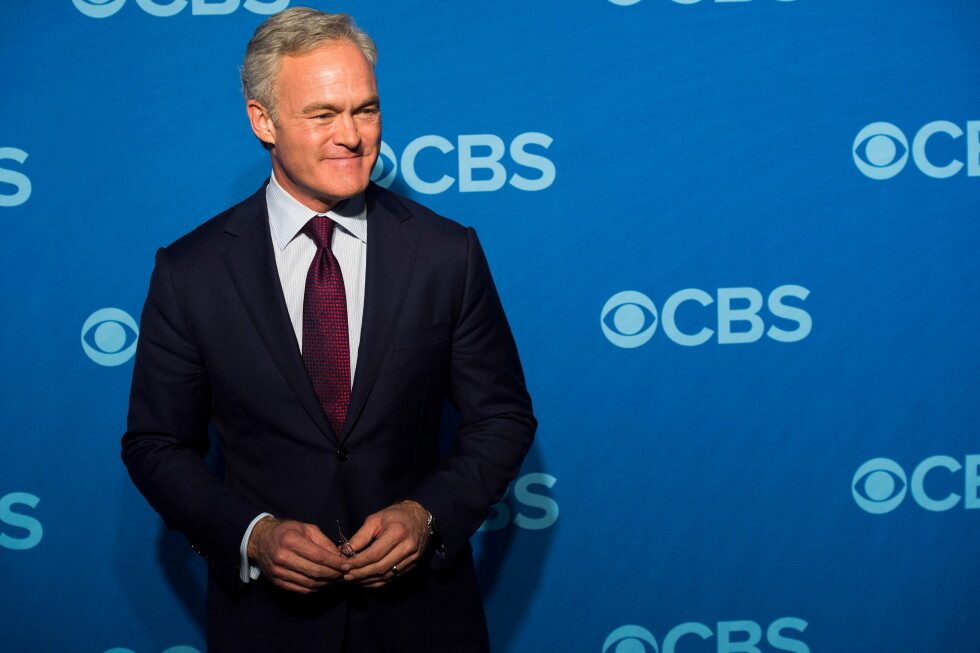
Scott Pelley Details "Emotional" '60 Minutes' Firing in New Interview
Former '60 Minutes' correspondent Scott Pelley has opened up about his unexpected firing from the long-running news program, describing the experience as deeply emotional.
In a wide-ranging podcast interview with The New York Times' Lulu Garcia-Navarro, Pelley shared his side of the story, revealing that he did not anticipate his dismissal despite recent tensions with new leadership.
Pelley, who had been with CBS for 37 years, recounted being called to a meeting by CBS News President Tom Cibrowski, expecting a discussion about previous confrontations with new boss Nick Bilton.
He was surprised to find Bari Weiss, the news division's editor-in-chief, also present.
Pelley stated he initially thought Weiss's presence was "terrific," believing he would finally get explanations for the sweeping changes she had implemented the previous week, which included replacing executive producer Tanya Simon and letting go of two correspondents and other key staffers.
However, the meeting, which he says lasted only about 10 minutes, ended with his termination.
This development is significant as it offers a firsthand account from a veteran journalist regarding the internal turmoil at a prominent news institution.
Pelley expressed his shock at the changes, referring to the day the announcements were made as "Black Thursday." He highlighted that Tanya Simon, the first woman to be executive producer of '60 Minutes,' had concluded the season with a 9% audience growth, a rare achievement in broadcast television.
He also noted that no one saw the "massacre" of senior staff coming.
The emotional toll of the situation was evident, with Pelley reportedly tearing up multiple times during the interview.
He likened the feeling to having "your spouse was murdered," emphasizing the close-knit relationships among the '60 Minutes' team.
He described colleagues as family, having worked together for decades, traveling, dining, and even facing combat together.
Pelley also detailed an "insulting" introductory email from Nick Bilton to the staff, which suggested the program had been "frozen in amber" since 1968.
This was followed by a staff meeting where Bilton, instead of offering explanations, reportedly read a statement from his phone.
Pelley described this as "jaw-dropping" and "tone-deaf," especially given the presence of "50 heartbroken people" who had devoted their lives to '60 Minutes'.
During a contentious meeting, Pelley challenged Bilton's qualifications and accused Weiss of "murdering" the show.
Despite this, he maintained he never expected to be fired.
He also raised concerns about leadership advocating "falsehoods and bias," citing an instance where he felt political influence was exerted to alter a story about confrontations with federal immigration agents.
Pelley claimed Weiss asked if they could make protesters "look more violent" and describe a car as driving toward an officer, which he said was not supported by video evidence.
Pelley revealed he has not spoken to fellow correspondents Lesley Stahl, Jon Wertheim, and Bill Whitaker, who chose to stay based on assurances of working without interference.
He suggested that these assurances might not be trustworthy and implied that Anderson Cooper's departure, attributed to family reasons, might also be linked to the new leadership.
Key points
- Scott Pelley was fired from '60 Minutes' after a meeting he says lasted about 10 minutes, following 37 years at CBS.
- Pelley described the changes at '60 Minutes' as a "Black Thursday massacre," noting the removal of executive producer Tanya Simon and two correspondents.
- Pelley recounted a staff meeting where new boss Nick Bilton read a statement from his phone, which Pelley found "tone-deaf" and "insulting."