
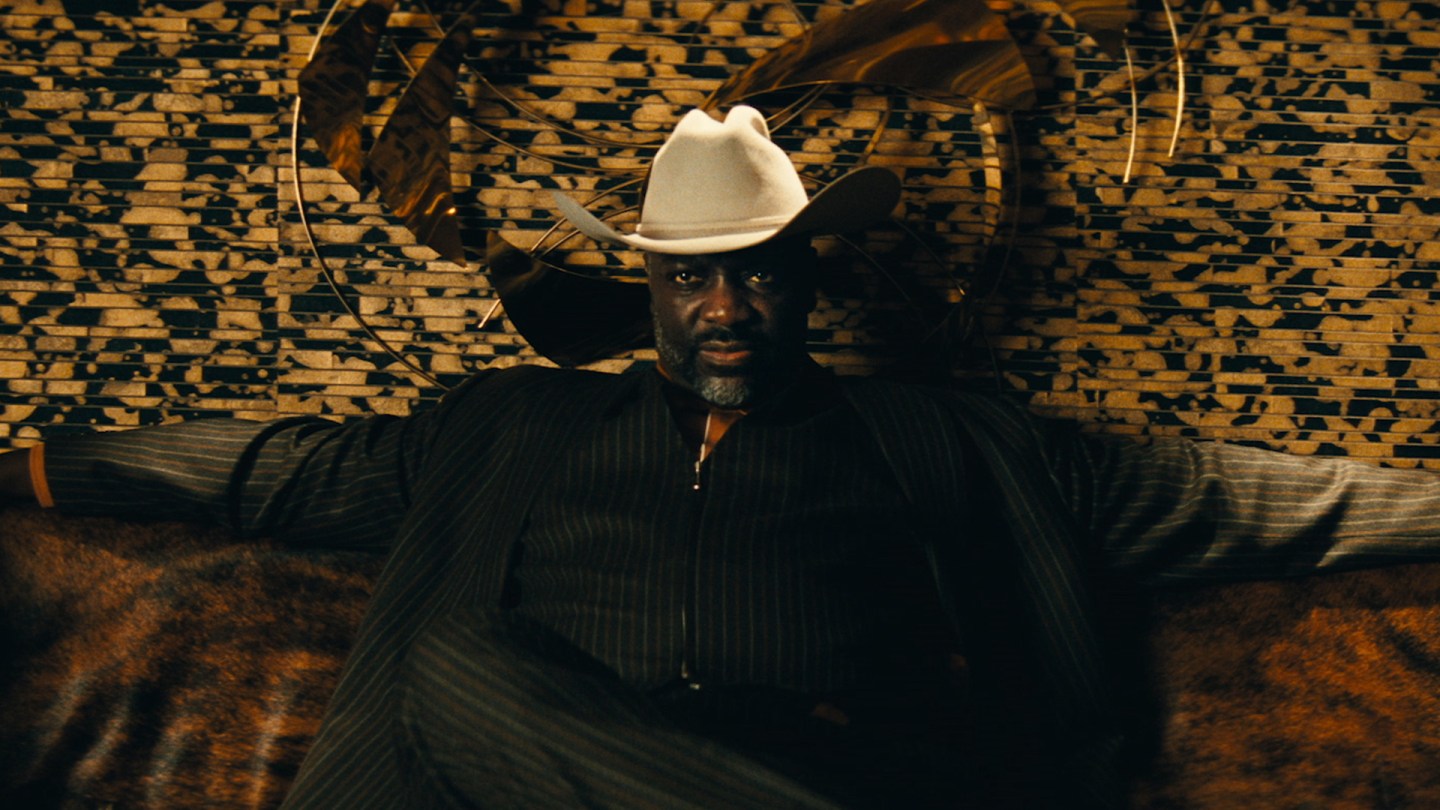
Adewale Akinnuoye-Agbaje Discusses Alamo Brown's Poignant Euphoria Finale
Adewale Akinnuoye-Agbaje, who portrayed the character Alamo Brown in the third season of *Euphoria*, has shed light on the significant changes made to his character's death scene in the recent finale.
Originally, the script depicted Alamo Brown, a strip club empresario and the season's primary antagonist, dying at the height of his power, celebrating victories over rivals.
However, Akinnuoye-Agbaje and series creator Sam Levinson decided to re-envision the moment, aiming for a more profound and reflective end for the character.
This collaborative decision led to a more poignant conclusion, where Alamo Brown is seen contemplating his life and desires for love and family, a stark contrast to his ruthless demeanor throughout the season.
This shift in the character's final moments provides a deeper emotional resonance for a character who had been defined by his pursuit of money and exploitation.
Akinnuoye-Agbaje explained that they questioned whether Alamo's journey was solely about material gains.
He stated, "We thought it would be more substantive to have a reflective moment where he realizes he has everything, and yet nothing.
He should be thinking, 'Is this really what it's all about?'" This led to the scene where Alamo, feeling unwell, watches the celebrations at his club and expresses a longing for a different life.
## Character Development and Collaboration
The actor, known for roles in projects like *Lost* and *The Bourne Identity*, highlighted his inquisitive approach to character development.
He noted that this collaborative spirit is something he has experienced throughout his career, including his breakout role as Simon Adebisi on HBO's *Oz*, co-created by Sam Levinson's father, Barry Levinson.
Akinnuoye-Agbaje recalled suggesting that the *Oz* character, initially written as an American gang-banger, be African, an idea that was embraced by the creators.
For *Euphoria*, Akinnuoye-Agbaje was drawn to the role of Alamo Brown due to Levinson's ability to elicit strong performances.
He even contributed a theory about Alamo's motivation for being in the strip club business during his audition, which Levinson incorporated into the show.
This theory, that Alamo believes everything comes from women and men spend their lives trying to return to that, became a memorable line in the series.
## On-Set Dynamics and Farewell
Despite the camaraderie among the young cast, Akinnuoye-Agbaje maintained a degree of separation to preserve his accent and the dark nature of his character.
He described a "lovely full circle moment" when Barry Levinson and Sam's mother visited the set.
He also recounted filming the intense death scene with Colman Domingo, noting the lightheartedness that emerged between takes despite the gravity of the scene.
Akinnuoye-Agbaje did break character for Zendaya's final day of filming, attending her sendoff even though he wasn't scheduled to be on set.
He wanted to pay his respects to the actress, whose character, Rue, had a complex and ultimately tragic interaction with Alamo Brown.
Earlier in the season, Alamo had given Rue what was later revealed to be Fentanyl-laced Percocet, a move Akinnuoye-Agbaje described as Alamo's sadistic way of dealing with a perceived traitor.
He acknowledged the strong fan reaction to his character, particularly given Zendaya's beloved status, and expressed his satisfaction with bidding farewell to Alamo Brown.
Key points
- Adewale Akinnuoye-Agbaje's character, Alamo Brown, died in the climactic final scenes of Euphoria's season three finale.
- The initial script for Alamo Brown's death was changed after discussions between Akinnuoye-Agbaje and creator Sam Levinson.
- The revised scene aimed for a more poignant moment where Alamo reflects on his life, rather than dying while celebrating his successes.